Villa Swagatam at “Ce qui se trame”: Weaving New Paths Between India and France at Mobilier National, until 4th Jan. 2026
04 December 2025
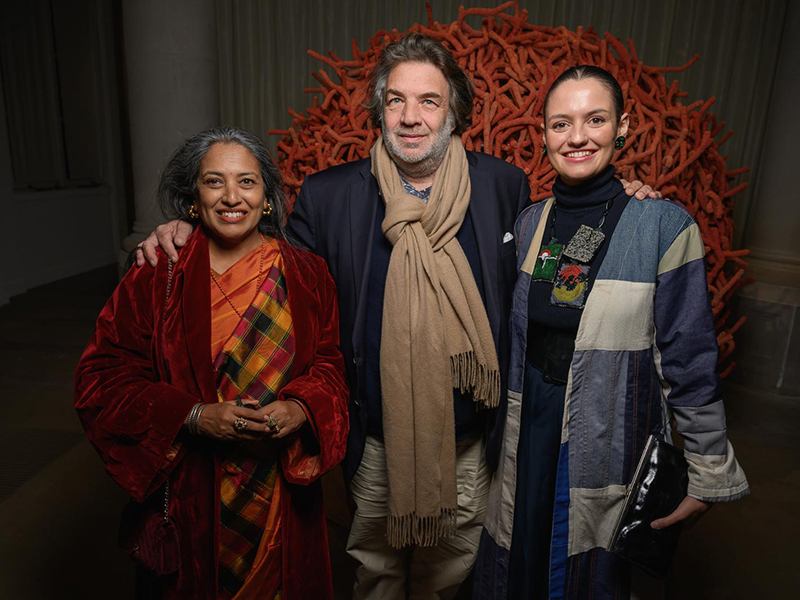
Ce qui se trame. Histoires tissées entre l’Inde et la France (Textile Matters. Woven Stories Between India and France) is an exhibition that unfolds at the Galerie des Gobelins, Mobilier National, from 4 December 2025 to 4 January 2026. Designed and curated by the Franco-Indian duo Christian Louboutin (Artistic Director) and Mayank Mansingh Kaul (Curatorial Adviser), and organised by the French Embassy in India in partnership with Institut français Paris and the Manufactures Nationales, the exhibition traces four centuries of textile dialogue between India and France, from the Mughal courts to the 2025 haute couture season.
Through seven thematic sections, the exhibition highlights how artists, artisans, designers, and architects have shaped a shared visual and material language. Rare historical textiles sit alongside contemporary commissioned works and new collaborative creations such as the participative embroidery displayed within the exhibition space, revealing how craft traditions have continually transformed past legacies into vital, living practice.
Special attention in the exhibition is given to creations emerging from Villa Swagatam, batches 1 and 2, who are featured in the exhibition.
FOCUS ON THE WORKS OF VILLA SWAGATAM’S ALUMNI
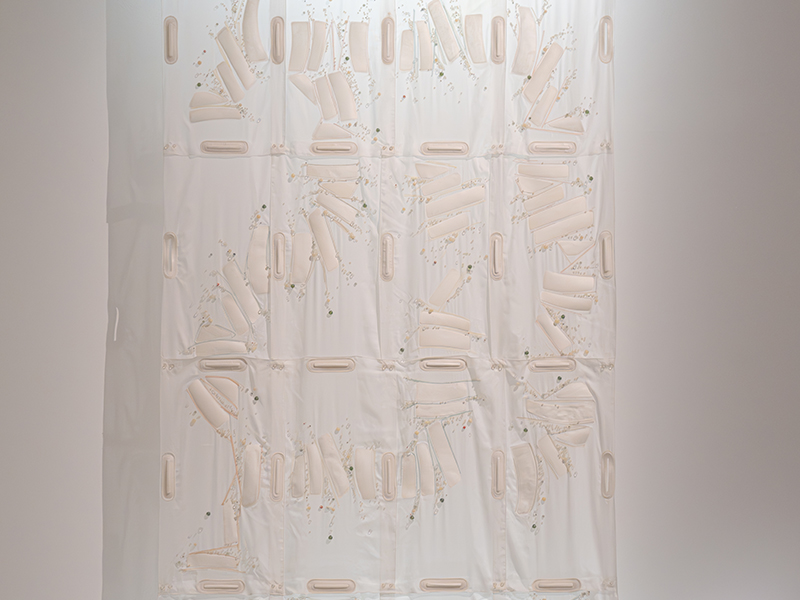
Antonin Mongin, The Hair Veil of Srishti [Vastrakala, 2025]
During his residency with Vastrakala, Antonin Mongin developed a contemporary reinterpretation of a 1938 Schiaparelli hair-embroidered veil, bringing European traditions of memorial craftsmanship into dialogue with South Indian devotional practices. Working with hair donated to the Tirumala temple and embroidered on Tamil Nadu Khadi cotton by Vastrakala’s master artisans, he created a 170-cm veil that merges material, ritual, and technique across cultures.
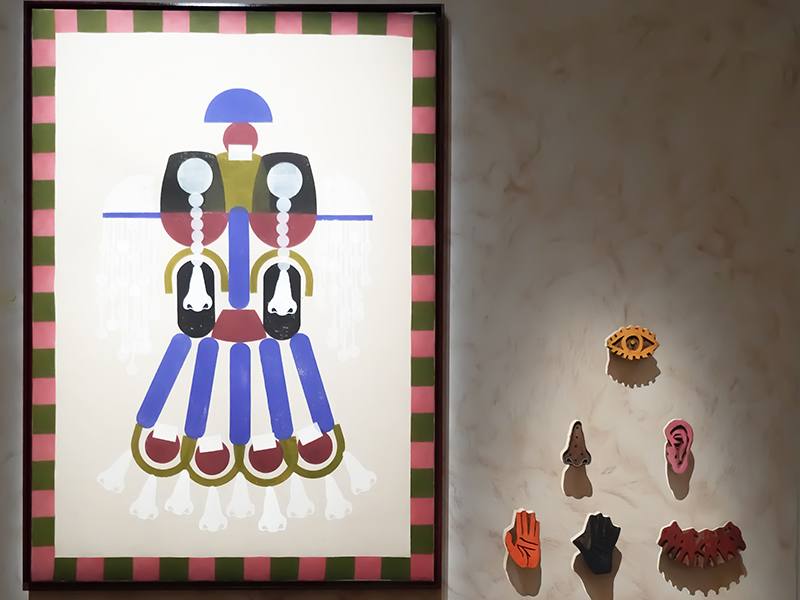
Pauline Guerrier, Guardians of the World and The Offerings [Kalhath Institute, 2025]
During her residency in India, Pauline Guerrier explored the ancestral art of block printing in Jaipur and immersed herself in rituals celebrating the regeneration of the Earth, the fertility of crops, and the abundance of the oceans. In the workshops of Rajasthan, she discovered the patient and meditative rhythm of block printing, which she translated to her series of works entitled Les Offrandes (The Offerings). In parallel, her encounters with living rituals across India inspired Guardians of the World, universal figures gathering the symbolic forms, gestures, and colours of these rites, which are meticulously embroidered pieces produced over thousands of hours with artisans of the Kalhath Institute in Lucknow.
Victoire de Brantes, Vitraux brodés [Vastrakala, 2024]
During her residency at Vastrakala, Victoire de Brantes developed Vitraux brodés, an installation created in partnership with Lesage Intérieurs, where she explored ornamentation through a contemporary and playful lens. The exhibit reflects her experimentation with glass and embroidery to produce decorative panels that reconsider the traditional codes of ornament.
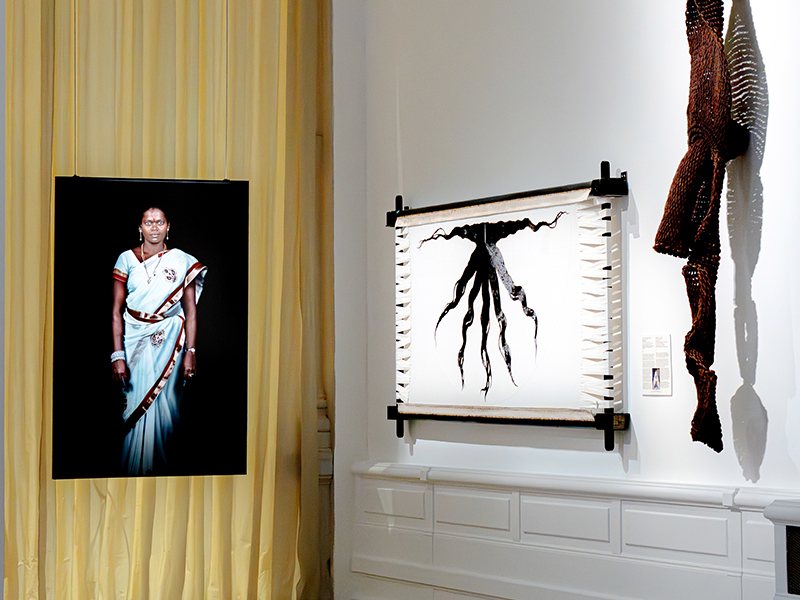
Elvira Voynarovska, Ladies from the back [Jaipur Rugs, 2025]
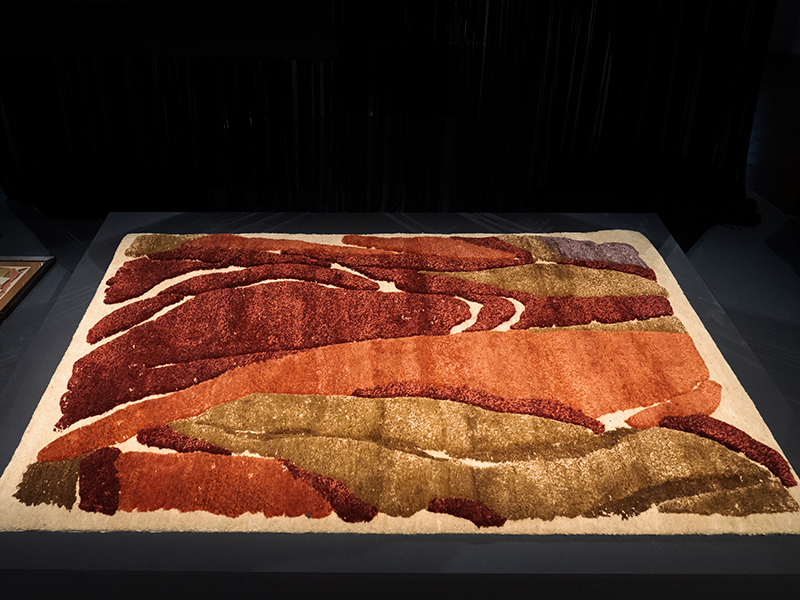
During her residency with Jaipur Rugs, Elvira Voynarovska developed a body of work centered on the women weavers of Rajasthan, whose traditional clothing seamlessly blends practicality and beauty. Moved by their mastery, resilience, and the cultural narratives woven into their attire, she translated these encounters and collaborated with the women weavers of Manpura Macheri to co-create the rug that is exhibited at the exhibition, wherein the weavers become both subjects and makers of the artwork.
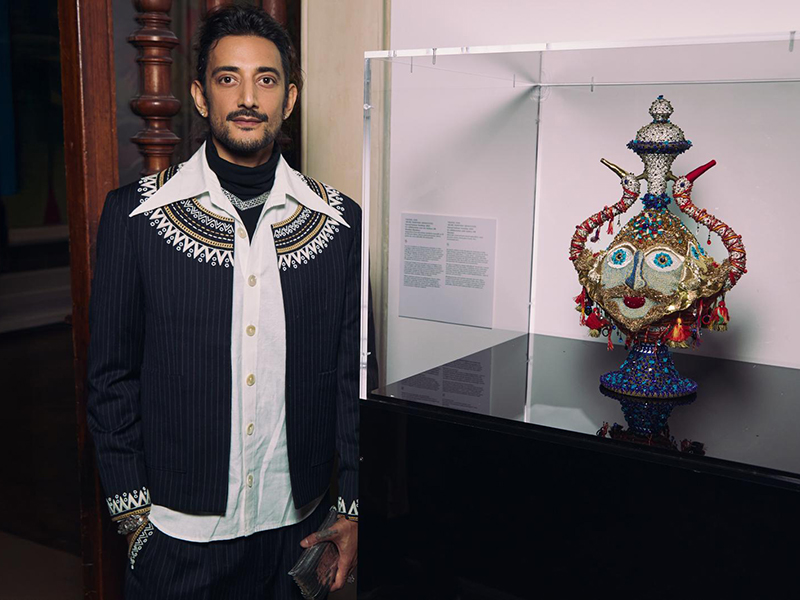
Kunaal Seleokar, Yaksha, Vase (Buire Indienne)
During his residency at the Manufactures Nationales, Kunaal Kyhaan Seolekar created a conceptual reinterpretation of the historic Buire Indienne (water vessel) from the Sèvres archives, transforming the original Mughal-inspired vessel into a sculptural, totemic object that bridges Indo–French material lineages. His contemporary Buire is here covered with a richly embroidered “second skin,” produced in close collaboration with master artisans at Ateliers 2M, who undertook the challenge of realizing this three-dimensional textile sculpture. Using zardozi, kantha, beadwork, ceremonial stitching, lace, and sacred thread, the piece merges precious and synthetic materials into a “relic of the future”.
WORKSHOPS BRINGING INDIAN SAVOIR-FAIRE TO PARIS, AN AUTHENTIC DIALOGUE BETWEEN ARTISTS AND ARTISANS
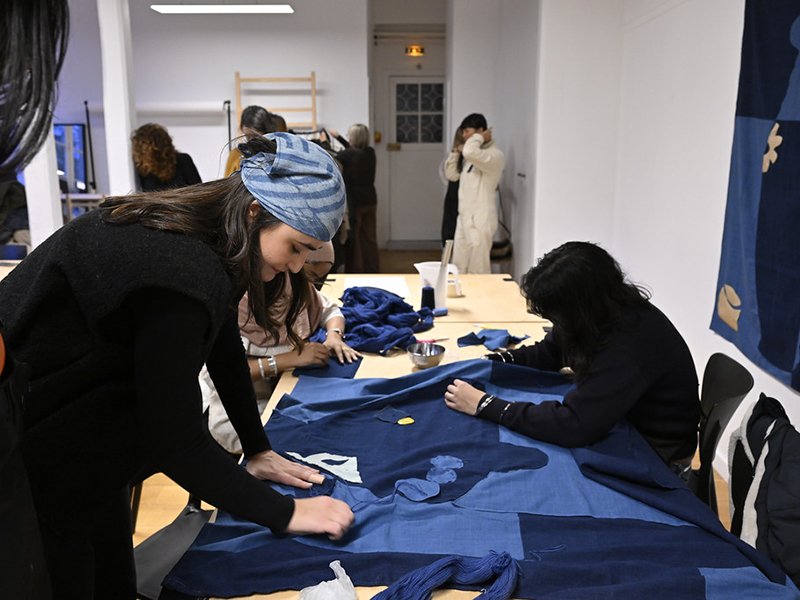
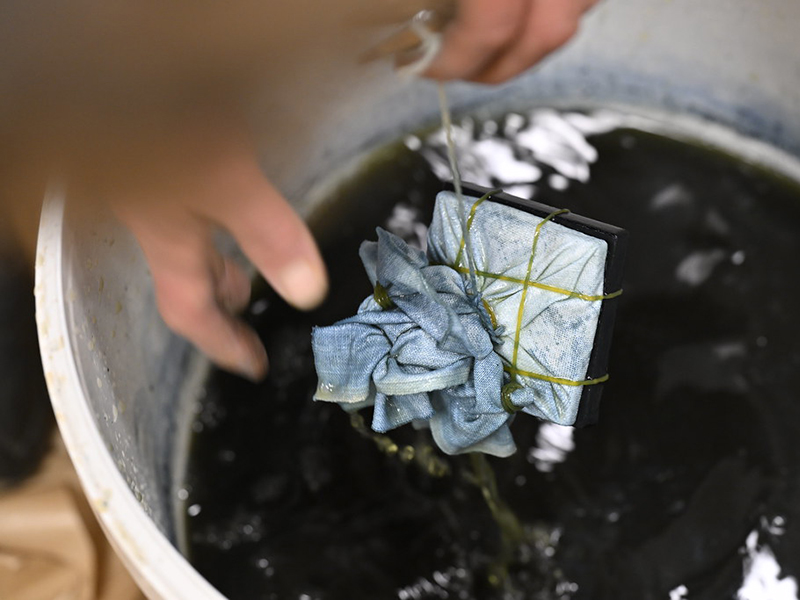
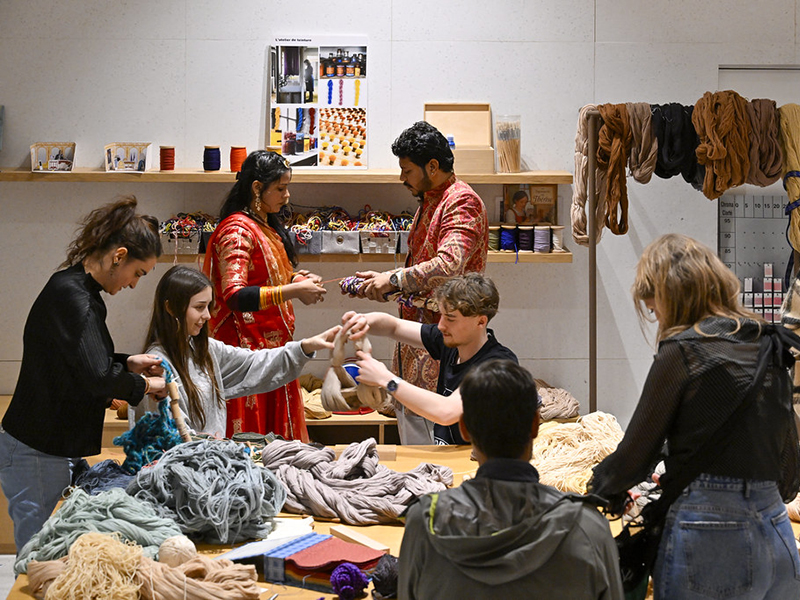
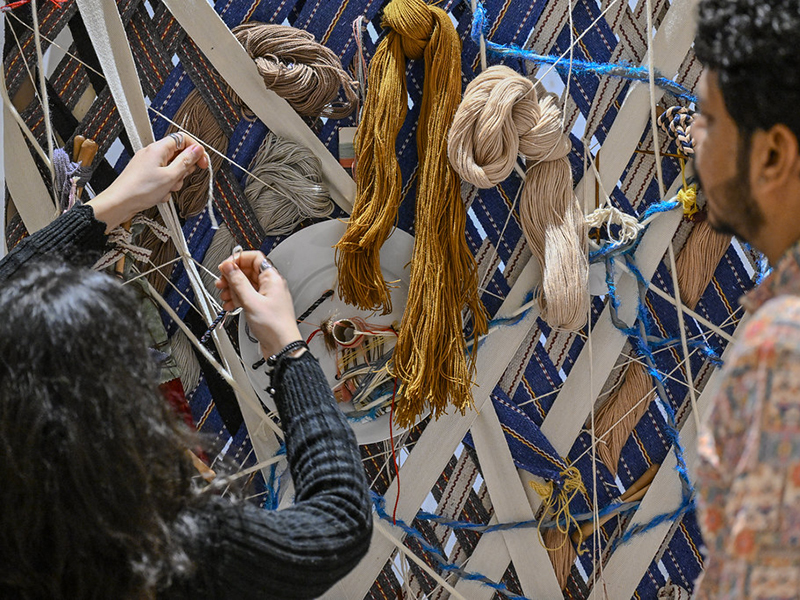
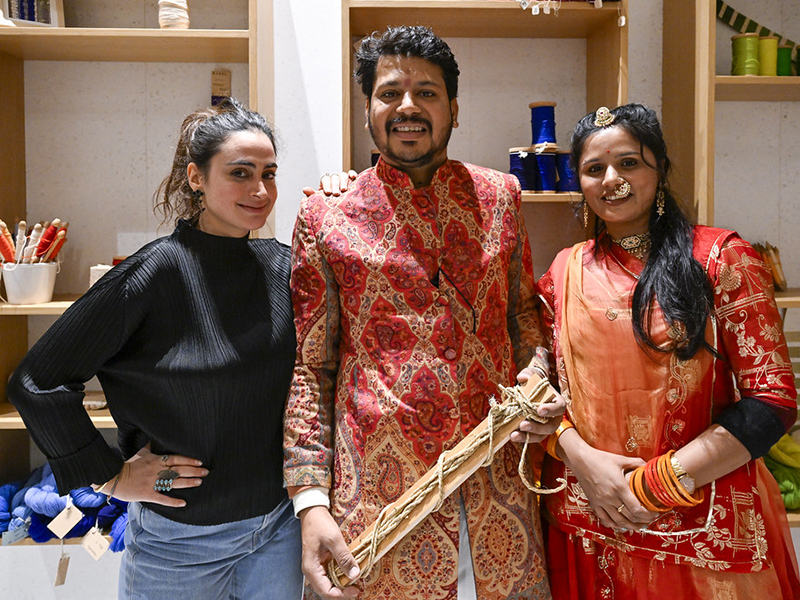
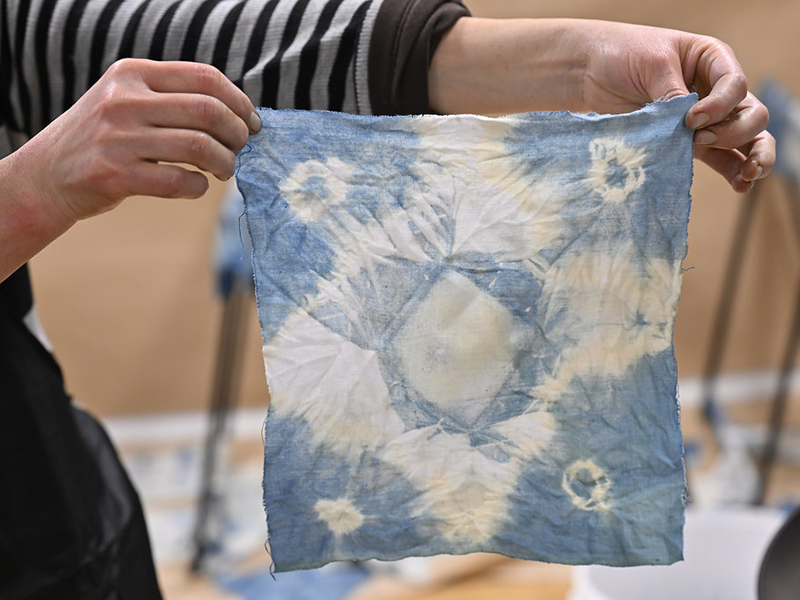
During the opening week (3–7 December), the Institut français organised a four-day festival: two professional days dedicated to networking sessions and roundtables, followed by two public days showcasing Franco-Indian craftsmanship through workshops, performances, book signings, and lectures.
Among the highlights, Marisol Santana, former Villa Swagatam resident at Nila House, led an indigo dyeing workshop in collaboration with Jaipur-based master artisan Manish Verma, inviting participants to explore natural pigments and traditional dyeing techniques. Déborah Fischer, former resident with the Public Arts Trust of India, conducted a workshop alongside master charpoy maker Dinesh Solanki from Jodhpur, introducing participants to the craft, aesthetics, and transmission of this emblematic artisanal savoir-faire.
Freshly returned from their three-month immersion at Hampi Art Labs in Hampi, designers Sacha Parent and Valentine Tiraboschi are also represented at the boutique of the exhibition. Their works, created in close collaboration with local artisans and craft communities across Karnataka, are on display, reflecting the rich dialogues, materials, and techniques explored during their residency.
With the support of the Sutrakala Foundation & le19m
The exhibition, as well as the participation of our residents, benefited from the key support of the Sutrakala Foundation, a non-profit organisation dedicated to research, curation, and innovation in Indian textiles, led by its co-founder Shon Randhawa.
It was also supported by le19M, a hub created by CHANEL to preserve and transmit fashion and decorative métiers d’art. Among its resident houses, Lesage Intérieurs contributed its exceptional embroidery expertise, in full alignment with le19m’s mission to champion living, forward-looking craftsmanship.
To explore the exhibition, visit here
To know more about the exhibition, visit here